Museum of Islamic Art - Qatar, Doha
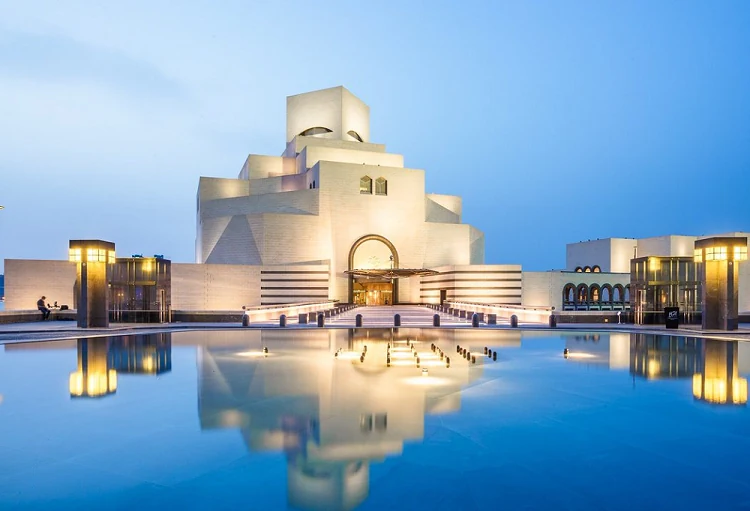
Rising along the coastline of Doha, the capital of Qatar, the Museum of Islamic Art is not merely a museum; it is also a meeting point between contemporary architecture and a deeply rooted civilization. This structure, overlooking the calm waters of the Gulf, captivates its visitors with its exterior appearance just as much as with the works it holds within. Having become an unmissable stop for art lovers visiting Doha from all corners of the world, the museum also houses one of the most comprehensive collections of Islamic art in existence.
The Story and Founding of the Museum
The foundations of the Museum of Islamic Art were laid in the early 2000s. Sheikh Hamad bin Khalifa Al Thani, the emir of Qatar at the time, brought this project to life with the vision of transforming his country into a powerful center not only economically but also culturally. The world-renowned American architect I. M. Pei was commissioned to design the museum. Pei, who was in his nineties at the time, traveled for months to conduct in-depth research into Islamic architecture before accepting the project. He studied historic structures in Egypt, Spain, Tunisia, and other Islamic countries. At the end of this journey, he himself stated that he drew inspiration from the geometric simplicity of the Ibn Tulun Mosque in Cairo. The museum opened its doors to visitors in 2008 and, shortly after its opening, took its place among the world's most important cultural institutions.
Its Architecture: Geometry Written in Stone
Those who see the Museum of Islamic Art are immediately struck by its simplicity. However, this simplicity is deceptive; as one approaches the structure, it becomes clear just how masterfully the geometric forms have been brought together. Its façade, clad in white limestone, takes on entirely different tones with sunlight at various times of day. The building was constructed on an artificial island created specifically in Doha Bay, and as a result it stands abstracted from the density of the city, as if existing in a world of its own. Regarded as one of I. M. Pei's most significant achievements, this structure reinterprets the elements of traditional Islamic architecture in a modern language. The central dome inside and the geometric openings that draw light inward offer visitors a spiritual atmosphere.
The Collection: 1,400 Years of Heritage
The true magic of the museum is of course held within its collection. Works reflecting the artistic accumulation of approximately 1,400 years of Islamic civilization are spread across the museum's five floors. The collection includes manuscripts, ceramics, textiles, jewelry, weapons, glassware, and examples of metalwork. The geographical range of the works is extremely broad; pieces collected from a vast geography stretching from Andalusia to Central Asia, and from Egypt to Iran, are displayed together. This diversity strikingly illustrates that Islamic art is not the product of a single culture, but rather the shared outcome of different geographies, languages, and traditions. Among the most attention-grabbing pieces in the collection are Quranic pages dating back to the 7th century, rare Ottoman miniatures, and Iranian carpets that dazzle with their fine craftsmanship.
Where Is the Museum and How to Get There?
The Museum of Islamic Art is located within Museum Park, situated along the Corniche, Doha's historic waterfront. Getting to the museum, which is quite close to the city center, is extremely straightforward. The Doha Metro and various bus lines connect the museum to the rest of the city. The museum, also easily accessible by taxi and car rental, offers a destination where a full day can be spent, complete with its surrounding expansive park area and coastal walking paths. The open-air restaurants and café areas right beside it are ideal for resting and taking in the view of the bay after a visit.
Visitor Information and Practical Details
The museum is open to visitors for most of the week, though it is worth checking the current opening hours before planning a visit. The entrance fee has been kept at a nominal level, making the museum accessible to visitors from all walks of life. Audio guide services in Arabic and English are available inside. The museum also houses a library, a research center, a gift shop, and multiple dining and refreshment points. Photography is largely permitted, although restrictions may apply in certain special exhibition areas. Educational workshops and guided tours organized for children are also among the services the museum offers.
Cultural Significance and Its Place on the World Stage
Since the day it opened, the Museum of Islamic Art has stood out as an institution that shapes the cultural identity not only of Qatar but of the entire Gulf region. Having been featured numerous times in the world's leading art and architecture publications, the museum is also the recipient of many international awards. This structure, one of the most tangible symbols of the cultural diplomacy policy Qatar has pursued in recent years, demonstrates the kind of brand value the country has created beyond its oil and natural gas wealth. The museum, which brings together the artistic heritage of the Islamic world on a universal platform, today stands in an unquestionable place among the most important cultural institutions in the Middle East.
Date Added: