King Moshoeshoe Statue – Lesotho Maseru
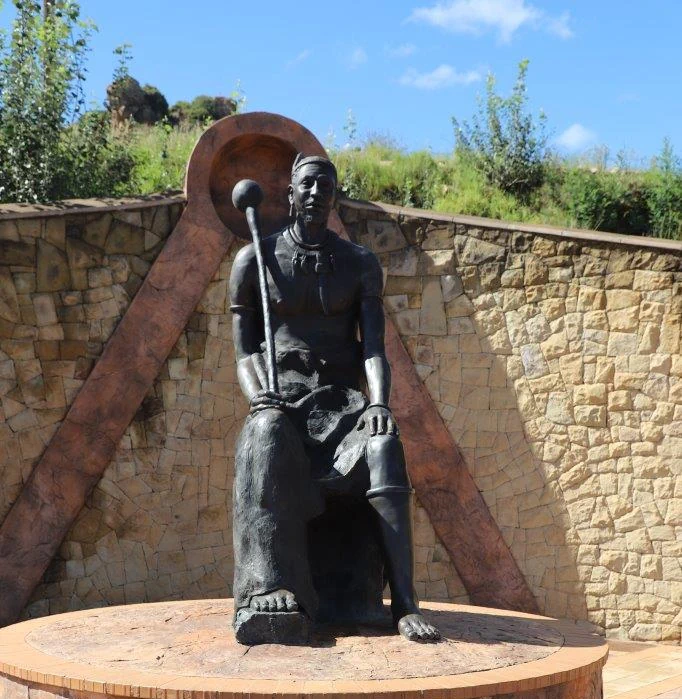
Located in the heart of the Republic of South Africa, the capital city of Lesotho a small but deeply rooted mountain kingdom Maseru is a city that carries the founding story of a nation. King Moshoeshoe I, the founder of the Basotho nation and first king of Lesotho, was born around 1786 and, under the most challenging conditions of his era, united dozens of different clans to build an independent kingdom. Today Maseru is home to a monument statue that keeps his name and legacy alive. This statue has become an unmissable stop for history enthusiasts and tourists visiting the city.
Construction and History of the Statue
The King Moshoeshoe I statue in Maseru stands at a central point in the capital, mounted on a tall plinth. The statue is a tangible expression of the Basotho people's deep respect for their national identity and spirit of independence. The Moshoeshoe I Memorial is recognised as one of the most important cultural and historical landmarks in the capital Maseru, carrying the mission of passing the country's founding history on to future generations. In addition to the statue, various commemorative ceremonies are held in Maseru to keep Moshoeshoe's legacy alive. Moshoeshoe Day, a national holiday celebrated every year on 11 March the anniversary of Moshoeshoe's death gains its significance through ceremonies held around this monument. The country's only international airport also bears his name, which once again underscores King Moshoeshoe's unique place in Lesotho.
Features and Artistic Details of the Statue
The King Moshoeshoe I statue in Maseru presents itself as a large-scale figure mounted on a tall plinth. The statue depicts Moshoeshoe in traditional Basotho attire, in a commanding stance that guides his people and presides over his nation. With its position overlooking the capital, the statue carries both symbolic meaning and powerful visual impact. Beyond the monument in Maseru, various other statues and monuments dedicated to Moshoeshoe exist at different points across Lesotho; the most notable of these are the statues at Thaba Bosiu Cultural Village, approximately 24 kilometres from the capital. All of these structures reflect the central place Moshoeshoe occupies in Lesotho's national identity.
Maseru and Its Surroundings
The statue is situated in the centre of Maseru, Lesotho's capital, forming one of the city's symbolic focal points. Maseru lies along the Caledon River, which forms the border with the Republic of South Africa, in a geographically striking setting. The Thaba Bosiu National Monument, located close to the capital, stands out as the historic site where Moshoeshoe's legacy is felt most profoundly. Thaba Bosiu meaning "Mountain at Night" has held national monument status since 1967 and welcomes thousands of visitors each year. Atop the plateau, visitors can find the graves of Moshoeshoe I and Moshoeshoe II, the ruins of the 19th-century royal village, and a panoramic view of the Maseru area. The cultural village at the base also offers a conference centre, rondavel-style accommodation and guided tours.
A Complex Legacy
King Moshoeshoe I is regarded as one of the most successful leaders in southern African history. During the Mfecane the period of widespread warfare and displacement that swept southern Africa in the wake of the rise of the Zulu Kingdom he used diplomacy to unite dozens of displaced clans and forge the Basotho nation. Known for his generosity even toward defeated enemies, whom he integrated into his kingdom rather than subjugating, Moshoeshoe stood out for his reliance on diplomacy as much as on force. To navigate the threats posed by the Boers and the British, he signed an agreement with Britain in 1868, placing Basutoland under British protection a move that saved his territory from annexation into South Africa. Moshoeshoe died at Thaba Bosiu on 11 March 1870, and the path he blazed laid the groundwork for the country's independence in 1966. Today, the airport, the national holiday and the many monuments bearing his name in Lesotho bear witness to how deeply rooted this legacy has become.
Visitor Information
The King Moshoeshoe Statue is located in the centre of Maseru, the capital of Lesotho. Maseru is connected to the Republic of South Africa via border crossings and is one of the most accessible points in the region. When visiting the statue, it is strongly recommended to also include the nearby Thaba Bosiu National Monument in the itinerary; this historic plateau, approximately 24 kilometres from Maseru, is recognised as Lesotho's most important cultural and historical heritage site. Thaba Bosiu can be reached by car or by minibus taxi. The best time to visit the region is between March and October, when the weather is mild and pleasant.
Date Added: