Jose Gervasio Artigas Statue – Uruguay Montevideo
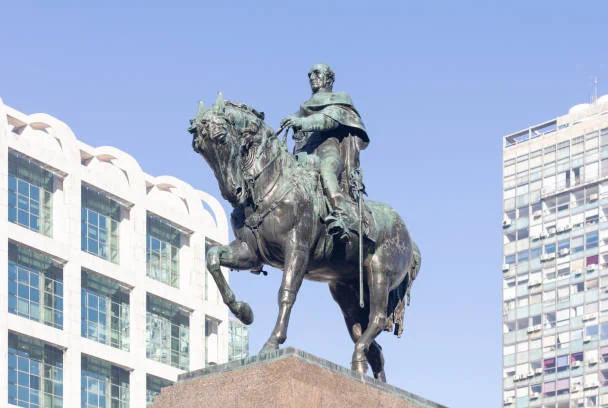
Rising at the very center of Plaza Independencia the heart of Montevideo and the focal point of Uruguay's political and cultural life the José Gervasio Artigas Statue is far more than a monument. It is the most tangible expression of a nation's memory, its longing for independence, and its national identity. Visited by thousands of locals and international tourists every year, this landmark stands among Montevideo's most iconic symbols and serves as an essential stop for anyone wishing to understand Uruguayan history.
Artigas: Uruguay's National Hero
José Gervasio Artigas Arnal was born on June 19, 1764, in Montevideo. The son of a wealthy criollo family, Artigas spent his youth on the family's estancias. The deep connection he forged during those years with the world of the gauchos and indigenous peoples laid the foundation for the pro-people political views he would champion in later life. In 1797, he joined the Spanish Blandengues Regiment as an officer, finding himself at the very center of the era's political upheavals.
When the fires of independence ignited across the Río de la Plata in 1810, Artigas joined the cause. The Battle of Las Piedras in 1811, a decisive victory against Spanish forces, proved his military genius to the entire continent. Yet to define Artigas merely as a soldier would be to tell only half the story he was also Uruguay's first social reformer. In the "Instructions of the Year XIII" drafted in 1813, he openly championed republican and federalist principles, placed land reform on the agenda, and called for the protection of indigenous rights. These documents represented an remarkably progressive political vision for Latin America at the time.
When Portuguese forces invaded the Eastern Province in 1816, Artigas fought alone for five grueling years before being defeated by Buenos Aires forces in 1820 and forced into exile in Paraguay. There he lived humbly, farming the land, unable to return to his homeland for 30 years. When he died in Paraguay on September 23, 1850, Uruguay had long since won its independence. His remains were brought home in 1856; today they rest in the mausoleum beneath Plaza Independencia, inaugurated in 1977.
Features and Artistic Value of the Statue
The Artigas Statue at Plaza Independencia is one of Uruguay's most impressive monuments, remarkable for both its scale and artistic craftsmanship. Standing 17 meters tall and weighing approximately 30 tons, the structure consists of a bronze equestrian statue set atop a polished grey granite pedestal. The word "Artigas" is inscribed on the front of the base in bronze lettering, while a bas-relief frieze wrapping around the pedestal depicts one of the most dramatic episodes in Uruguayan history the "Exodus of the Eastern People" (Éxodo del Pueblo Oriental). These reliefs vividly recreate the great migration of 1811, when thousands followed Artigas to the western bank of the Uruguay River. The statue and reliefs were produced in Italy, while the pedestal was constructed in Uruguay.
The monument's creator was one of the foremost sculptors of his era in the interpretation of statesmen and historical figures. The equestrian statue portrays Artigas in a proud and resolute stance; the horse's dynamic pose and the hero's defiant gaze lend the monument both power and grace. The combination of bronze and granite materials gives the work a sense of permanence and grandeur.
Plaza Independencia: The Center of History
Plaza Independencia, where the Artigas Statue stands, is Montevideo's most significant public square. Located at the precise intersection of Ciudad Vieja (the Old City) and the modern city center, it is the symbolic heart of Uruguay's historical and political memory. At one end of the square stands the centuries-old Puerta de la Ciudadela (Citadel Gate), while at the other stretches Avenida 18 de Julio, the city's busiest boulevard. The buildings surrounding the plaza include the former presidential palace Palacio Estévez, the city's most celebrated theater Teatro Solís, and Palacio Salvo a dazzling example of Art Deco architecture. Within this geographical and architectural ensemble, the Artigas Statue serves as both the soul and focal point of the square.
Artigas's Legacy and the Symbolic Meaning of the Statue
In Uruguay, Artigas is not merely a historical figure he is something closer to a national faith. Streets, squares, schools, and institutions across the country bear his name. The city on the northern border was even named after him: Artigas. The mausoleum built directly beneath the statue is guarded around the clock by military sentinels a scene that reflects the deep reverence Uruguay holds for its hero in everyday life.
Artigas's ideas land reform, protection of indigenous peoples, federalist republicanism profoundly shaped Uruguay's political trajectory in the decades that followed. To embrace his legacy means not only to honor a war hero, but to affirm the ideals of social justice and popular sovereignty. For this reason, the area in front of the statue at Plaza Independencia has long been the unchanging venue for national holiday ceremonies, student marches, and political rallies.
Visitor Information
The José Gervasio Artigas Statue is located at the center of Plaza Independencia in Montevideo's Ciudad Vieja neighborhood. The square is easily accessible by public transport from anywhere in the city, and can also be reached on foot along Avenida 18 de Julio. The mausoleum directly beneath the statue is open to visitors and features walls inscribed with dates of significance in Uruguayan history, as well as several soldier statues standing guard inside. An unmissable addition to any Montevideo itinerary, this site is a unique place where history, art, and national identity converge in a single point.
Date Added: