Gemäldegalerie - Berlin, Germany
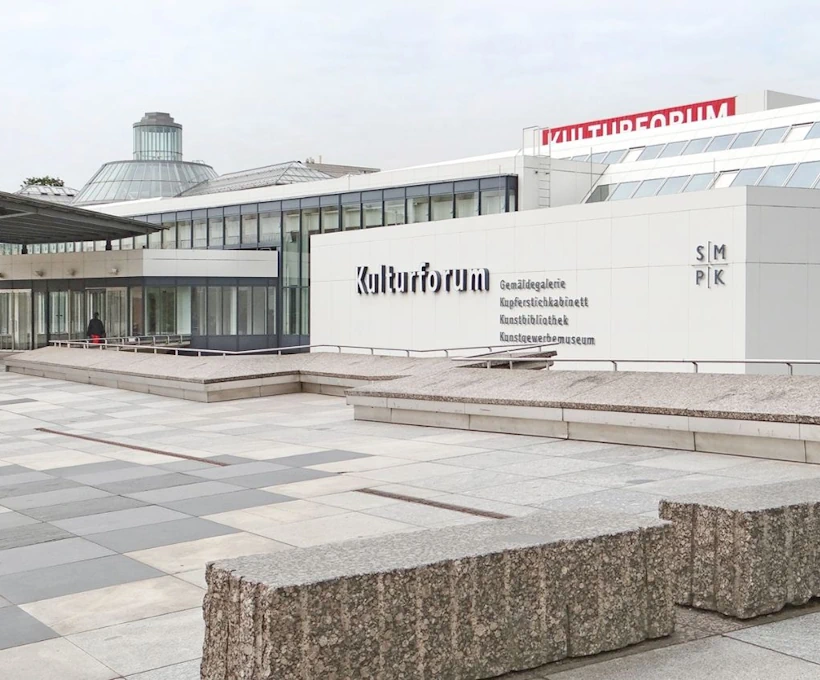
The Gemäldegalerie, located in Germany's capital, Berlin, is a world-renowned and prestigious art museum housing one of Europe's most comprehensive collections of European paintings from the late Middle Ages to the early modern period. Meaning "Painting Gallery" in German, the Gemäldegalerie displays approximately 1,500 works from a broad timespan ranging from the 13th to the 18th century in its permanent collection. Located in the Kulturforum, the museum is neighboring the Berliner Philharmonie and the Neue Nationalgalerie.
History of the Gemäldegalerie
The foundations of the Gemäldegalerie are based on the art collecting initiated by the Electors of Brandenburg in the 17th century. The works accumulated by the Prussian Royal Family over centuries were exhibited in various buildings on Berlin's Museum Island during the 19th century. During World War II, the collection was fragmented and scattered across both sides of a divided Berlin. After German reunification, following long debates and negotiation processes, the collection was brought back together. The modern museum building designed by Rolf Gutbrod opened in 1998, and the unified collection began to meet visitors in its current location. Despite its centuries-old history, the museum is considered a relatively young institution with its current building.
Richness of the Collection
The Gemäldegalerie collection possesses an extraordinary wealth covering the golden ages of European art history. Works by German, Flemish, Dutch, Italian, French, and Spanish masters are exhibited in the museum's various halls. The strongest part of the collection consists of German and Flemish Early Renaissance works. Masterpieces by giants of the German Renaissance such as Albrecht Durer, Hans Holbein, Lucas Cranach the Elder, and Matthias Grunewald are among the museum's most precious treasures. In the Italian Renaissance section, works by names like Raphael, Botticelli, Titian, and Caravaggio are featured. The Flemish and Dutch section exhibits significant works by Rubens, Van Dyck, Rembrandt, and Vermeer.
The Rembrandt Collection
The Gemäldegalerie ranks among the museums with the largest number of works by Rembrandt van Rijn in the world. Six major paintings and many studies by the Dutch master are included in the museum's permanent collection. These works, demonstrating Rembrandt's mastery in the art of portraiture, captivate visitors with his unique technique in the use of light and shadow. Presenting the artist's self-portraits, religious scenes, and historical compositions together, this collection offers a must-see experience for Rembrandt fans.
Italian Renaissance Masterpieces
The museum's Italian Renaissance section brings together elite works from the most brilliant period of European art history. Sandro Botticelli's Venus and Mars, Raphael's elegant Madonna compositions, and Titian's portraits reflecting his mastery of color are among the highlights of this section. Works by Caravaggio, notable for his dramatic use of light, are also among the museum's most popular paintings. This comprehensive collection, extending from early Italian art to the Baroque period, presents the evolution of Italian painting from a holistic perspective.
Flemish and Dutch Painting
The Gemäldegalerie also possesses an extremely rich collection in terms of Flemish and Dutch painting. Peter Paul Rubens' large-scale mythological and religious compositions form some of the museum's most impressive paintings. Anthony van Dyck's elegant portraits, Johannes Vermeer's scenes of daily life, and Frans Hals' lively group portraits are also among the shining stars of the collection. Housing the best examples of the 17th-century Dutch still-life tradition, the museum has one of the most comprehensive collections in the world in this field.
Museum Architecture and Experience
The Gemäldegalerie building is a modern structure that opened in 1998. Designed by Rolf Gutbrod, the building allows for the exhibition of works under optimal conditions with its spacious and bright halls. The Grand Gallery, a central oval hall, forms the heart of the museum, providing access to all other exhibition sections. The museum's interiors, where natural light is used extensively, are designed to reflect the paintings in their most natural appearance. The museum features audio guide services, digital information points, and a comprehensive museum shop.
Visitor Information and Recommendations
The Gemäldegalerie is located in the Kulturforum area in Berlin's Tiergarten district. Easily accessible from every point of the city via S-Bahn and U-Bahn connections, the museum is within walking distance of Potsdamer Platz. Considering the size of the collection, it is recommended to plan a visit of at least three to four hours to fully explore the museum. The museum is relatively quiet on weekday mornings, offering a more comfortable opportunity to examine the works. For art and culture enthusiasts who wish to discover all the great masters of European painting under one roof, the Gemäldegalerie offers one of Berlin's most valuable museum experiences.
Date Added: