Francisco de Orellana Statue – Quito Ecuador
Ecuador's capital Quito, built high in the Andes Mountains, is one of South America's most fascinating cities with its historical and cultural riches. This city, which is on the UNESCO World Heritage List, attracts attention not only with its colonial architecture but also with the important monuments it houses. One of these monuments is the Francisco de Orellana Statue, rising in the city's Guápulo district accompanied by a breathtaking view. This monument not only keeps the memory of an explorer alive, but also symbolizes a historic event considered the starting point of the discovery of the Amazon River, as well as representing the region's first contact with Europe.
Who Is Francisco de Orellana and the Discovery of the Amazon
Francisco de Orellana (1511-1546) was a brave yet controversial explorer and conquistador who served the Spanish Empire. He wrote his name in history as the first European to traverse the Amazon River from end to end. In February 1541, he joined a large expedition led by Gonzalo Pizarro, setting out from Quito. The primary purpose of this expedition was to find the legendary city of El Dorado and the rich spice lands of the east. However, the challenging conditions of the Andes, extreme cold, diseases, and food shortages made the expedition far more difficult than expected. During this grueling struggle, Orellana and a small group with him separated from Pizarro's main group in search of food, advancing along the Napo River. This separation led Orellana to one of history's greatest geographical discoveries traveling approximately 4,000 miles of the Amazon River to reach the Atlantic Ocean. He named the river "Amazon" due to the warrior women tribes he encountered during this journey.
The Statue's Location, Architecture and Historical Significance
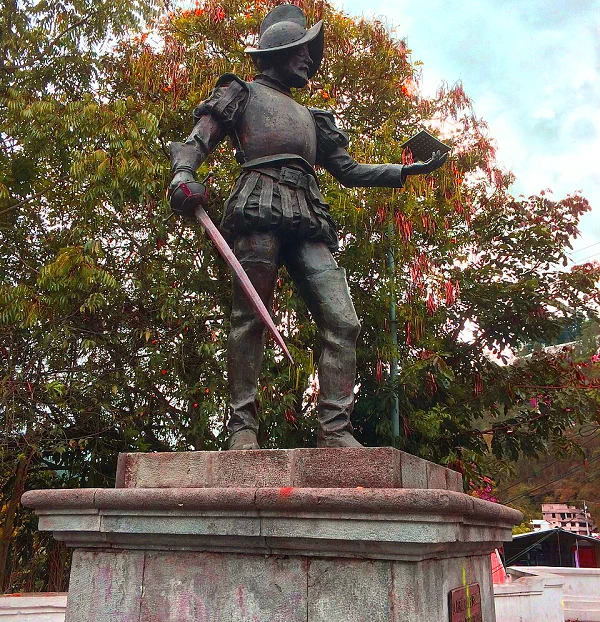
The Francisco de Orellana Statue in Quito is located to the east of the city, at a strategic and panoramic point known as the Mirador de Guápulo (Guápulo Viewpoint). The exact address of the statue is Camino de Orellana 137. The selection of this location carries great significance due to its reference to the historic starting point from which Orellana set out toward the Amazon. The monument statue is located right next to the historic Guápulo Sanctuary and sits on an old route known as the "Camino de los Conquistadores" (Road of the Conquistadors). This road was a strategically and geographically critical route used by Spanish conquistadors to cross from the Andes into the Amazon Basin. The statue itself consists of a bronze bust of Francisco de Orellana, generally depicted in armor with a determined stance, and a solid, modern cement/stone pedestal. This simple yet impressive structure reflects the explorer's determination and the magnitude of the discovery.
The Monument's Surroundings and Cultural Context
The area where the monument is located offers visitors magnificent views of the Cumbayá Valley and the surrounding Andes Mountains. These natural beauties further emphasize the statue's historical significance and offer visitors both a visual feast and intellectual depth. The Guápulo district is known for its unique bohemian atmosphere, art galleries, craft shops, and charming cafes. This cultural fabric adds a distinct vitality and appeal to the monument's surroundings, transforming it from merely a historical point into a center of life and art.
Controversies in Cultural and Historical Context
The Francisco de Orellana Statue holds an important place in Ecuador's history and national identity. The discovery of the Amazon River has both greatly contributed to geographical knowledge and profoundly influenced the region's cultural and economic development. For the city of Quito, this discovery has become synonymous with the slogan "Es gloria de Quito el descubrimiento del río Amazonas" (The discovery of the Amazon River is Quito's glory). However, such monuments can also give rise to different interpretations and debates in modern times. On one hand, figures like Orellana are associated with courage, the spirit of exploration, and the expansion of geographical knowledge, while on the other hand they can also be seen as symbols of colonialism, the devastating effects on indigenous peoples, and cultural conflict. For this reason, the statue has at times been the target of anti-colonial protests and has been subjected to vandalism. This situation clearly demonstrates the complex nature of history, how it is perceived from different perspectives, and the importance of confronting the past today.
A Stop and Point of Reflection for Visitors
Today, the Francisco de Orellana Statue continues to be an important tourist stop for both locals and tourists coming from all corners of the world. Visitors here can both see the monument of a historic figure and enjoy the unique natural beauty of Quito and the bohemian atmosphere of Guápulo. The monument, carrying the traces of the past and serving as a symbol of great discoveries and the controversies that come with them, offers visitors both a visual experience and an opportunity for deep reflection. This statue is not just a monument to an explorer, but also a living witness to the rich and complex history of Ecuador and South America.
Date Added: