Doris Salcedo - Colombian Sculptor
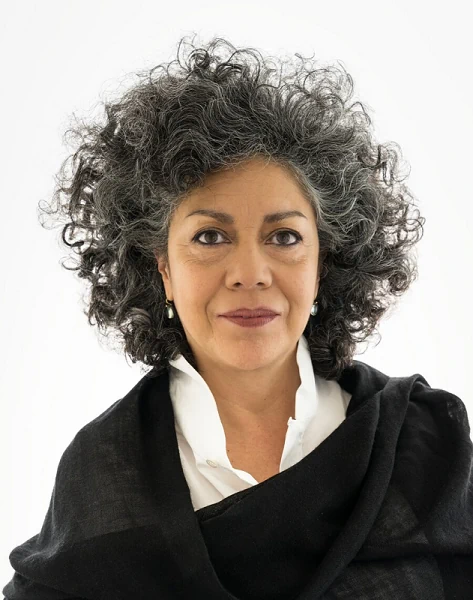
Doris Salcedo is one of the most powerful and courageous voices in contemporary art, born in Bogotá in 1958. She is not merely a sculptor; she is a witness who translates pain, loss, and social trauma into the language of art. Her works disturb, provoke thought, and raise questions in the viewer. For this reason, she has earned a distinct and lasting place on the world art scene.
Education and the beginning of her artistic journey
Salcedo received her Bachelor of Fine Arts from Universidad Jorge Tadeo Lozano in 1980, after which she moved to New York and completed her master's degree at New York University. She then returned to her country and taught at Universidad Nacional de Colombia. This period instilled in her both academic depth and the courage to confront the bitter realities of Colombia. Combining the contemporary art perspective she gained in New York with the social wounds of Colombia, she built a distinctive artistic language of her own.
The essence of her art: pain, loss and social memory
Doris Salcedo is known for works produced in reference to social pain, trauma, and loss experienced in Colombia and in many other parts of the world, exploring both personal and collective grief and memory. Her art does not merely offer an aesthetic experience; it invites a reckoning, a confrontation. Conveying heavy concepts such as enforced disappearance, displacement, and violence through everyday objects is the most fundamental quality that sets Salcedo's art apart from others.
Material selection and method in sculpture
Salcedo creates sculptures and installations that serve the function of political and mental archaeology, using household objects that accumulated significance and meaning during the years they were used in daily life. Chairs, tables, clothing, marble, and concrete are the primary materials she turns to. Working with different materials such as wooden furniture, clothing, marble, and grass in her installation works, the artist transforms these objects into documents bearing the traces of victims. Every object tells a story; every material is a silent witness to a grief.
Her prominent sculptures and works
In her work Unland: The Orphan's Tunic, Salcedo joins two mismatched tables at their center like a scar, stating that she was inspired by Colombian children who had witnessed the killing of their families and that she dedicated the work to them. Shibboleth is one of the artist's most striking works. Realized as a deep crack winding across the floor of the vast Turbine Hall at Tate Modern, this work hovers between sculpture and installation and represents the immigrant experience in Europe. In Plegaria Muda, in which she addresses the victims of mass killings in two different cultural contexts, the artist directs viewers toward tables arranged in a labyrinth format, with earth between them and real grass sprouting through in places.
The Istanbul Biennial and opening to the world
Salcedo's installation titled Untitled, prepared for the 8th Istanbul Biennial, consists of approximately 1,550 wooden chairs wedged between two buildings on Yemeniciler Caddesi in Karaköy. This work is extraordinarily powerful both formally and in terms of meaning. The purpose of the Istanbul installation was to evoke the faceless masses of migrants who keep the wheels of the global economy turning. Through this work, Salcedo used Istanbul not merely as an exhibition venue but as a mirror reflecting the world's problems of migration and displacement.
Art as witness to the Colombian civil war
In Doris Salcedo's sculptures, the overlooked existence of countless people who were killed, forcibly displaced, forcibly disappeared, subjected to torture, discrimination, and gender-based violence people who, in the wake of wars, conflicts, and the devastating effects of violence across different geographies of the world, have been reduced to mere statistical data is made into a problem to be confronted. Salcedo places these nameless people at the center of art; she transforms them from a number into a human being. This approach is both a political stance and a deep sense of humanitarian responsibility.
Her place on the world art scene
Salcedo, whose works are exhibited in world-renowned museums such as MoMA and Tate, is recognized as one of the most important representatives of contemporary art. The international awards she has received and the institutional exhibitions she has held have elevated her to the status of an artist known not only throughout Latin America but across the entire world. Her Colombian identity is both the source and the compass of her art; in every work she makes the pain, resilience, and memory of that geography felt.
Doris Salcedo as the voice of art
For Doris Salcedo, art is less a form of expression than a responsibility. In every work she produces, she makes a renewed and deeper effort to make the voices of victims heard, to keep social memory alive, and to render visible the void that violence creates. The artist emphasizes that all the funeral rituals that reveal the humanity of those who have been killed are absent, and that this void must be given voice. It is for this reason that Salcedo's works are not merely exhibited; they are felt, questioned, and remain in the mind for a long time.
Date Added: