Deutsches Museum - Munich, Germany
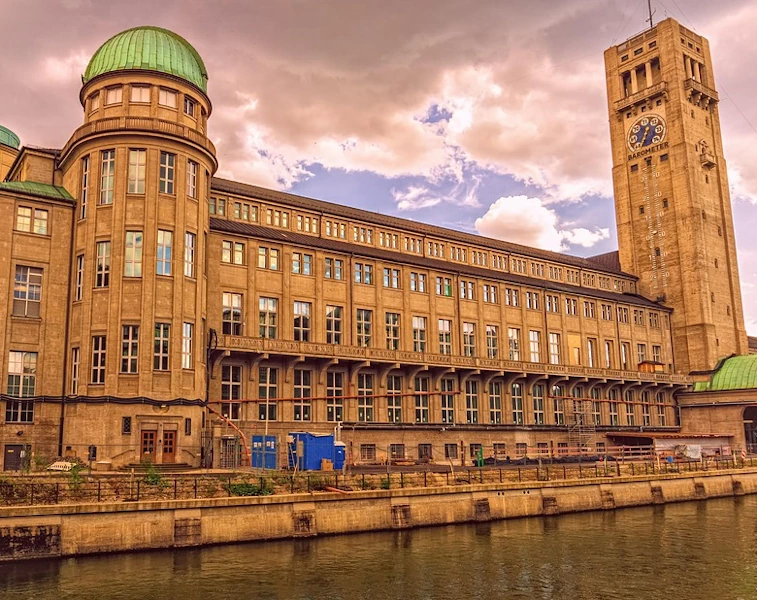
Located on a small island in the heart of the Isar River in Munich, the capital of Germany's Bavaria state, the Deutsches Museum is not just an exhibition space; it is an extraordinary treasure trove of knowledge showcasing thousands of years of human accumulation, curiosity, and creativity in the fields of science and technology. Known as the German Museum in English, it holds the title of the world's largest science and technology museum, welcoming nearly 1.5 million visitors annually with its collection of approximately 125,000 exhibited objects covering 50 different fields of science and technology. This massive collection, ranging from aviation to mining, chemistry to music, and maritime to robotics, offers a unique discovery and learning experience for children, adults, and researchers alike. The museum does not merely display historical artifacts; it also reveals the profound relationship between science, technology, and social transformation, drawing visitors into the great journey of humanity from the past to the future.
The History and Founding Story of the Deutsches Museum
The founding story of the Deutsches Museum is a striking example of how one individual's vision can transform into a world-class institution. Oskar von Miller, a thinker who believed science should reach all segments of society alongside his identity as an engineer, laid the foundations of the museum at a meeting of the Association of German Engineers on June 28, 1903. The city of Munich allocated the small island in the Isar River, known as Coal Island (Kohleninsel), for this project. Construction began in 1906; however, due to World War I and the subsequent economic crisis, the museum's permanent building could only be opened in 1925, on Oskar von Miller's 70th birthday. The neoclassical architectural structure designed by Gabriel von Seidl remains one of Munich's most impressive buildings today. World War II brought heavy destruction to the museum; more than eighty percent of the building was damaged, and twenty percent of the exhibited objects were destroyed. However, through extensive reconstruction work carried out in the post-war period, the museum came back to life and grew every decade to reach its current massive scale.
What’s Inside? Exhibition Areas and Collections
The breadth of the Deutsches Museum's collections is such that even several days would not suffice to see everything in a single visit. One of the museum's most striking sections, the Aviation and Aerospace Hall, houses a comprehensive collection ranging from Lilienthal gliders to modern jet aircraft, helicopters, and rocket technologies. The legendary "Auntie Ju" aircraft (Junkers Ju 52) and parts of the first Airbus aircraft are among the most notable works in this collection. The Mining exhibition offers one of the museum's most unique experiences. Walking through reconstructed life-size mine tunnels, visitors can learn about the history of mining from centuries ago to the present, experiencing it with all the sounds and atmosphere of a nearly real mine. While the Maritime exhibition documents the history of sea transport and research from ancient boats to modern submarines, the Automobile and Transportation section displays milestones in transport history, including the first Benz automobile built in 1886.
In the Electricity and Energy section, historical objects such as Siemens' first dynamo motor are featured, alongside the high-voltage demonstration with real lightning strikes, which remains one of the most popular interactive experiences for visitors. The Music Hall showcases the extraordinary evolution of music technology from ancient wind instruments to modern synthesizers, organ building, and pioneering electronic music devices. The Foucault Pendulum, one of the museum's most iconic symbols, serves as a magical experiment that visibly proves the Earth's rotation on its axis and can be watched for hours. The Microelectronics and Robotics exhibition presents the course of computer and artificial intelligence technology from the past to the present in an understandable and engaging language for both students and enthusiasts.
Special Sections and Interactive Experiences for Children
The Deutsches Museum is a unique destination for families, featuring sections specifically designed not just for adults but for the youngest visitors as well. Kids' Kingdom (Kinderreich) is a fully interactive discovery area prepared for children aged 3 to 8, featuring elements such as a fire engine, a water play area, a giant guitar, and a massive marble run. Interactive stations with buttons, levers, and mechanisms located throughout the museum allow children to explore for hours without getting bored. Live demonstrations, such as glass-blowing shows and electricity experiments, transform the visit from a mere tour into a lasting experience for visitors of all ages. The museum also offers comprehensive educational programs for schools, developing pedagogical approaches to pass on science and technology to future generations in an inspiring way.
Date Added: