Carlos Gardel Statue - Argentina - Buenos Aires
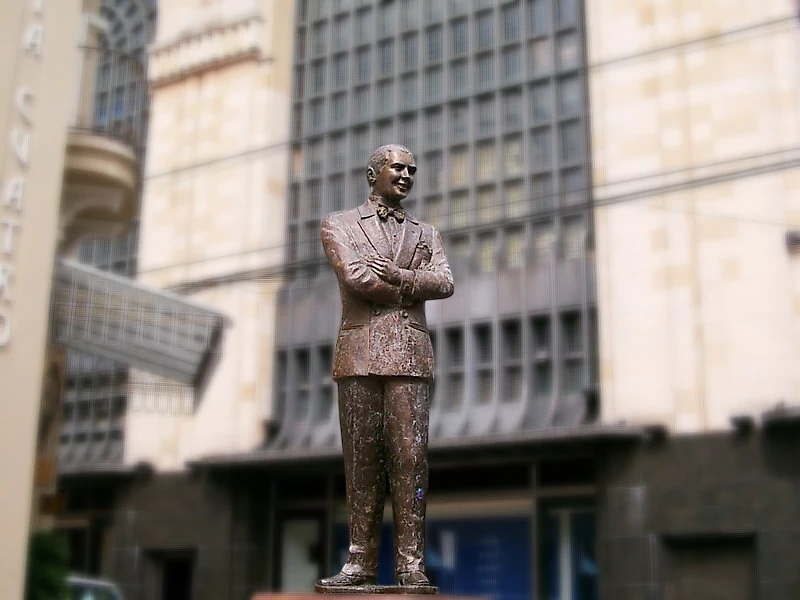
Carlos Gardel is one of the greatest tango artists in Argentina and the world. This legendary voice of French origin grew up in Buenos Aires and shaped an entire era through the depth of interpretation and emotion he brought to tango. Having become not merely a musician but a cultural icon through his voice, posture, and charisma, the monumental statue erected in Buenos Aires to keep Gardel's memory alive holds an honored place in the heart of the city.
Gardel and Buenos Aires
Buenos Aires was not merely a city for Carlos Gardel but the very essence of his identity. Growing up in the Abasto neighborhood, Gardel carried the streets, people, and spirit of that district into the language of tango. To this day, the museum bearing his name, the house where he lived, and many commemorative sites remain in Abasto. The statue is the embodiment of this deep bond; it returns Gardel to the city where he was born and raised, placing him once again on those very streets.
The significance and artistic identity of the statue
The Carlos Gardel statue was designed to reflect the artist's characteristic posture, hat, and smile. These elements that make up Gardel's iconic image have been rendered in the statue with great care. The work is not merely a portrait; it is the symbol of an era, a voice, and a culture. Every visitor who stands before it feels, if only for a moment, Gardel's voice and the spirit of tango.
A symbol of tango culture
Tango is not merely a dance or a genre of music; it is the expression of Buenos Aires' way of life, its sorrows, and its joys. Carlos Gardel became the most powerful voice of this culture, giving tango both a national and an international identity. A saying still repeated in Argentina goes: "Gardel sounds better with every passing day." This phrase captures his immortality in the most straightforward way. His statue is the materialization of that immortality in stone and metal.
The Gardel statue in literary and music tourism
The Carlos Gardel statue is an indispensable stop for every tango and culture enthusiast visiting Buenos Aires. For those wishing to explore the cultural fabric of the city, the statue, together with the Abasto Museum and the historic venues in its surroundings, forms a meaningful itinerary. For those wishing to follow in Gardel's footsteps, this statue serves as a starting point.
Gardel's contribution to world music
Carlos Gardel is the figure who played the greatest role in bringing tango to the world stage. Through the hundreds of records he made, the films he shot, and the performances he staged, he gave tango a universal language. The fact that tango is known in cities from Tokyo to Paris and from New York to Istanbul is largely due to Gardel's legacy. That an artist who created such a vast sphere of influence should be honored with monumental statues in Buenos Aires is an entirely fitting tribute.
Monumental statues and collective memory
Monumental statues are one of the most powerful ways for a society to pass on the names it values to future generations. The Carlos Gardel statue, in this sense, lays bare the deep respect that Argentine society holds for music, tango, and Gardel himself. Having transcended being merely a work of art over time, this statue has become an inseparable part of collective memory. Every person who passes by, whether aware of it or not, comes into contact for a moment with the legacy of tango and Gardel. Sculpture color has been prepared no differently from other monumental statues.
Visitor information
The Carlos Gardel statue is located in the Abasto neighborhood of Buenos Aires. Situated just beside Gardel's museum and the house where he lived, the statue has become a cultural meeting point for visitors to the city. This work, an indispensable stop on tango tours and cultural excursions, is a point that every visitor to Buenos Aires must add to their itinerary.
Date Added: