Atahualpa Statue - Peru Cajamarca
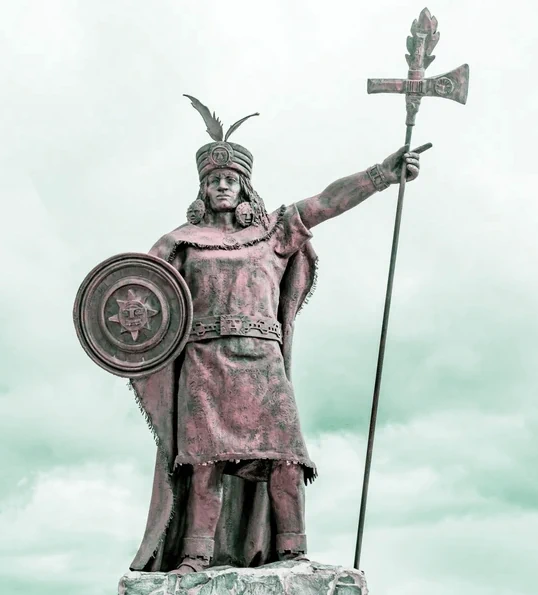
Atahualpa is the last ruler of the Inca Empire. Born around 1497, Atahualpa consolidated his dominance over the Inca throne by winning a bloody civil war against his brother Huascar. While ruling the Inca Empire, one of the most deeply rooted and powerful civilizations in history, he encountered the forces led by Spanish Conquistador Francisco Pizarro in 1532, and this encounter brought about both his own end and the collapse of a great civilization. Despite his short reign, Atahualpa continues to live on as one of the most iconic figures in South American history.
Cajamarca's Place in History
Cajamarca, a city in northern Peru, is an ancient settlement where events that changed the course of world history took place. The Battle of Cajamarca, which took place in this city's square in 1532, was a historic clash in which just a few hundred Spanish soldiers defeated thousands of Inca warriors and captured Emperor Atahualpa. This event accelerated the collapse of the Inca Empire and opened the doors to Spanish colonization of South America. Cajamarca today keeps this historical heritage alive, offering visitors a unique experience with both its natural beauty and deep historical fabric.
Where is the Atahualpa Statue Located?
The Atahualpa Statue rises in the heart of Cajamarca, Peru, in the historic city square. This square, known as Plaza de Armas, is the center of the city's social and cultural life. The placement of the statue in such a central location is no coincidence; its erection on the very historic ground where Atahualpa encountered the Spanish, was captured and spent his final days multiplies its symbolic value. Visitors who step into the square come face to face with the magnificent figure of Atahualpa and deeply feel the heavy atmosphere of history.
Features and Design of the Statue
The Atahualpa Statue was designed faithful to Inca tradition and symbols of rulership. The monument statue of Atahualpa is depicted in a powerful and dignified posture befitting an Inca ruler. The crown on his head and the traditional Inca garments he wears reflect the cultural fabric of the era, while the symbols in his hands represent both his political and spiritual authority. The statue rising on its pedestal creates an interesting historical contrast with the colonial architecture surrounding the square, presenting a tableau that reveals how the past and present coexist.
Atahualpa as a Symbol of the Inca Empire
Atahualpa has become a symbol of Inca culture, the spirit of resistance and a lost civilization beyond merely being a ruler. During the process that began with the arrival of the Spanish, Atahualpa tried to protect his lands and people, and trusting the Spanish promise of release in exchange for ransom, delivered large amounts of gold and silver. However this sacrifice was not enough, and the Spanish broke their word and executed Atahualpa in 1533. This unjust end transformed Atahualpa into a lasting symbol of resistance in the eyes of the people of Peru and all of Latin America. His statue in Cajamarca represents this spirit of resistance and the mourning of a civilization unjustly lost.
Atahualpa's Legacy in Peru
Atahualpa's legacy continues to thrive in Peru despite the passing of centuries. Inca tradition is kept alive at festivals held in Cajamarca every year, with ceremonies and performances in memory of Atahualpa. Inca history has played a decisive role in shaping Peru's national identity, and Atahualpa has become one of the most powerful symbols of this history. The image of Atahualpa encountered everywhere from school textbooks to museum showcases reminds the people of Peru of both their painful history and their ancient civilization heritage. His statue in Cajamarca continues to be an indispensable part of the city and the country as the most visible and powerful expression of this legacy.
Visiting the Atahualpa Statue
For visitors coming to Cajamarca, the Atahualpa Statue is the first stop in the city. Plaza de Armas is open to visitors from early morning until late evening and hosts a vibrant social life. The cafes, restaurants and historic buildings surrounding the square will enrich your visit further. Cajamarca is approximately one and a half hours by air from Lima, and it is also possible to reach the city by road. As this city is built at high altitude, it is recommended to dress accordingly especially in the evening hours when the air turns cool. This visit, where you will walk through history in the shadow of Atahualpa, will be one of the most unforgettable memories of your Peru trip.
Date Added: