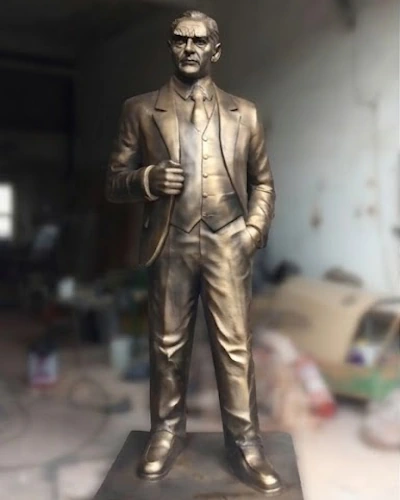
Antonio Jose de Sucre Statue – Ecuador Quito
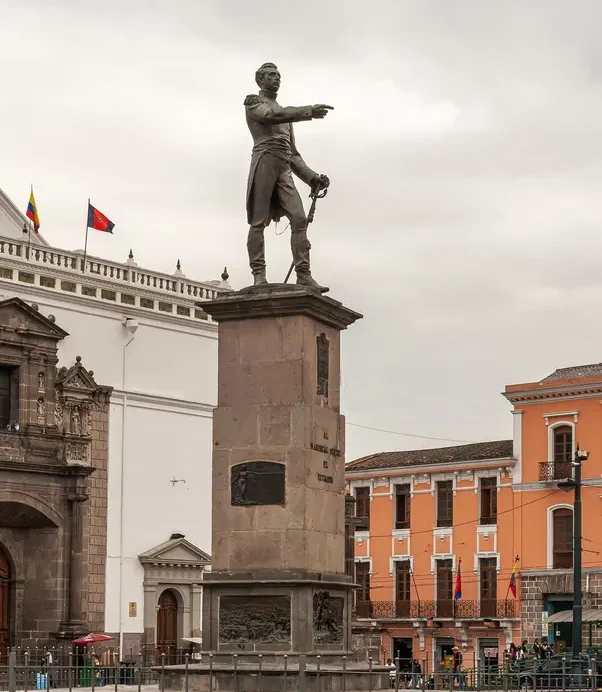
South America's struggle for independence brought many great names to the stage of history. But among them, General Antonio José de Sucre holds a unique place not only for his military genius but also for his honesty, virtue, and deep devotion to his people. The Sucre Statue standing today in Quito, the capital of Ecuador, is a work brought to life with great care to preserve the legacy of this remarkable leader and pass it on to future generations. Far beyond a mere monument, this sculpture is a lasting contribution to the memory of a nation, the soul of a geography, and the ideals of independence.
Who Was Sucre? His Place and Significance in History
Antonio José de Sucre was born in 1795 in what is now Venezuela. Joining the independence movement at a young age, he quickly became the most trusted commander of Simón Bolívar. Sharing Bolívar's vision and embracing his dream of a unified Latin America, Sucre spent much of his life on the battlefield in pursuit of those ideals. Unmatched in military intelligence and strategic foresight, he earned the sympathy and respect of peoples wherever he went. He is remembered in history not only as a soldier but also as a statesman, diplomat, and fair administrator. Assuming the first presidency of Bolivia, Sucre carried out his duties there with the same virtue and integrity, never placing personal interests above those of the nation.
The Battle of Pichincha and Ecuador's Freedom
Sucre's place in Ecuadorian history is truly special. The Battle of Pichincha, fought on May 24, 1822, was the turning point that changed the destiny of these lands. At the foot of the Pichincha volcano near Quito, the independence army under Sucre's command won a decisive victory against Spanish forces. This triumph accelerated the liberation not only of Ecuador but of all South America, permanently shifting the continent's political balance. The Battle of Pichincha is still celebrated today as Ecuador's national holiday, and Sucre's name is remembered across these lands with deep gratitude. Encountering his name on the streets, squares, and schools of Quito is entirely commonplace because for this people, Sucre is no abstract historical figure but a living, breathing symbol.
Quito's Historic Fabric and the Statue's Location
Quito, with its historic center added to the UNESCO World Heritage List in 1978 and its rich cultural texture, is one of the rare cities that lends profound meaning to monumental works. Every corner of the city is intertwined with history, colonial-era structures standing side by side with modern life. The Sucre Statue has been organically integrated into this unique urban fabric. The site chosen for the statue was carefully selected with historical and symbolic significance in mind. The relationship between the work and the city's skyline and panorama was a decisive factor from the very beginning of the design process. The statue does not merely fill a space it transforms that space in terms of meaning and offers visitors a tangible trace of history.
The Design Process and Artistic Approach
Throughout the production process, historical accuracy and artistic integrity were upheld together. Sucre's posture, facial expression, uniform, and overall silhouette were meticulously constructed based on documents, engravings, and historical sources from the period. The aim was not simply to achieve a visual likeness but to translate Sucre's spirit, character, and qualities of leadership into stone. This approach allowed the work to move beyond being a purely decorative object and gain a truly monumental identity. Every detail from material selection to surface treatment, from proportions to composition was evaluated individually. In monumental sculpture, it is not sheer scale alone but correct proportion and balanced composition that are decisive. Shaped with these principles in mind, the work creates a powerful and consistent visual impact whether viewed up close or from a distance.
The Language of Stone: Material and Technical Choices
In the art of monumental sculpture, the choice of material is not merely an aesthetic decision it is one that carries meaning. The texture, color, interaction with light, and change over time of the chosen material directly determine the long-term impact of the work. The materials selected and techniques applied in the Sucre Statue were determined in a way that ensures both the physical durability and visual depth of the piece. Surface treatments, transitions between forms, and volumetric composition were all carried out in full adherence to the demands of the sculptural discipline. The resulting work establishes a powerful connection with the viewer not only on a technical level but on an emotional one as well.
Cultural Reflections of an International Project
Producing monumental works for different countries and cultures demands from the artist both a deep capacity for research and a strong ability for cultural empathy. International sculpture projects put to the test not only an artist's technical skills but also their knowledge of history, communicative strength, and respect for the values of different societies. This project in Ecuador once again confirmed that reality. Understanding who Sucre was, what he means to these lands, and the emotional bond the people of Ecuador have formed with him proved to be one of the most critical factors determining the success of the work. A sculpture produced without this understanding, however technically accomplished it may be, cannot carry monumental meaning.
Date Added: