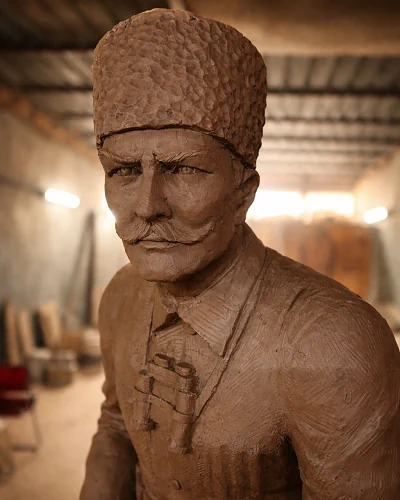
Alfonso de Albuquerque Sculpture - Lisbon, Portugal
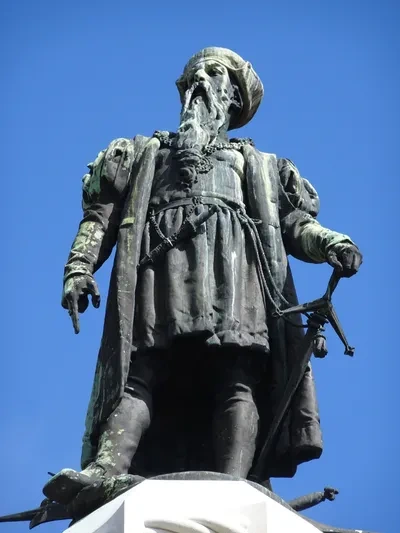
Lisbon, the capital of Portugal, is a city that carries traces from every era of history. This ancient city rising along the banks of the Tagus River is also home to one of the most important figures of the Age of Discovery. One of these figures, Alfonso de Albuquerque one of the architects of the Portuguese maritime empire continues to live on through a bronze monument woven into the historic fabric of Lisbon. This sculpture is a symbol not merely of one man, but of an era, a nation, and a civilization that once ruled the seas.
Who Was Alfonso de Albuquerque?
Alfonso de Albuquerque was born near Lisbon in 1453. Serving the Kingdom of Portugal as a sailor and commander, Albuquerque proved himself quickly and became the chief architect of Portugal's expansion strategy in the Indian Ocean. In 1509, he was appointed Governor of Portuguese India a position that placed him among the most powerful colonial administrators in history. By conquering strategic ports such as Goa, Malacca, and Hormuz, he consolidated Portugal's dominance over trade routes. Known as a firm yet fair ruler, Albuquerque sought to maintain a balance in his relations with local peoples in the territories he conquered. He died off the coast of Goa in 1515, leaving behind an imperial legacy that would endure for centuries.
Who Made the Sculpture and When?
The Alfonso de Albuquerque Sculpture was created by Portuguese sculptor António Teixeira Lopes. Taking shape in the late 19th century, this work is a reflection of Portugal's deep nostalgia for the Age of Discovery and its sense of national pride. During that period, Portugal carried out numerous monumental sculpture projects with the aim of commemorating its great imperial past and reinforcing national identity. The Albuquerque sculpture emerged as part of this deliberate process of cultural construction. Cast in bronze, the sculpture has stood in one of Lisbon's historic locations ever since, reminding visitors of the Age of Discovery.
Features and Design of the Sculpture
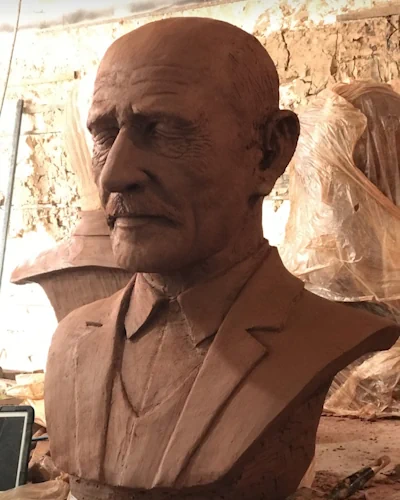
The Alfonso de Albuquerque Sculpture is a powerful example of the classical monumental sculpture tradition. The bronze figure, set upon a tall pedestal, depicts Albuquerque in the posture of a commander. The military details of the era rendered in his clothing, the determination in his facial expression, and the authoritative feeling conveyed by the overall composition elevate the sculpture far beyond an ordinary monument. The patina color of the bronze has deepened over time, lending the work both age and gravitas. The inscriptions on the pedestal convey Albuquerque's identity and historical significance to visitors.
Where Is the Sculpture Located?
The Alfonso de Albuquerque Sculpture is located in Lisbon's historic Belém district. Belém is one of the most important sites in Portuguese exploration history, as it is the point from which the great navigators set sail. When one considers that Vasco da Gama set out from here on his voyage to India, the symbolic weight carried by Belém becomes even clearer. The sculpture stands in the same district as iconic structures such as the Tower of Belém and the Monument to the Discoveries. This spatial unity makes the Albuquerque sculpture more than a tourist attraction; it renders it an inseparable part of the geography where Portuguese history is told most vividly.
Cultural and Historical Significance
Albuquerque is a controversial yet unquestionably influential figure in Portuguese history. On one side stand those who see him as a hero who made his country master of the seas; on the other, those who believe he represents the brutal face of colonialism. Both perspectives persist to this day, and the area around the sculpture occasionally becomes a space for historical debate. Yet both sides acknowledge one thing: Albuquerque's traces stretch from India to Malaysia, from the Persian Gulf to the shores of Africa, and are still felt across these geographies. The sculpture in Lisbon, viewed from this angle, stands not merely as a monument to one man, but as one erected for a critical period in global history.
A Discovery Route in Lisbon
Those who travel to Lisbon to see the Alfonso de Albuquerque Sculpture are advised to explore the Belém district thoroughly. The most important structures in Portuguese history stand gathered in the immediate vicinity of the sculpture. The Jerónimos Monastery, the Tower of Belém, and the Monument to the Discoveries are the indispensable stops along this route. Walking along the banks of the Tagus River and moving from one monument to the next carries you right into the heart of the great maritime adventures of the 15th and 16th centuries. Albuquerque's bronze eyes have in all likelihood been gazing at the same river, the same horizon, for centuries that horizon to which the ships would one day return.
Date Added: