Albertina - Vienna, Austria
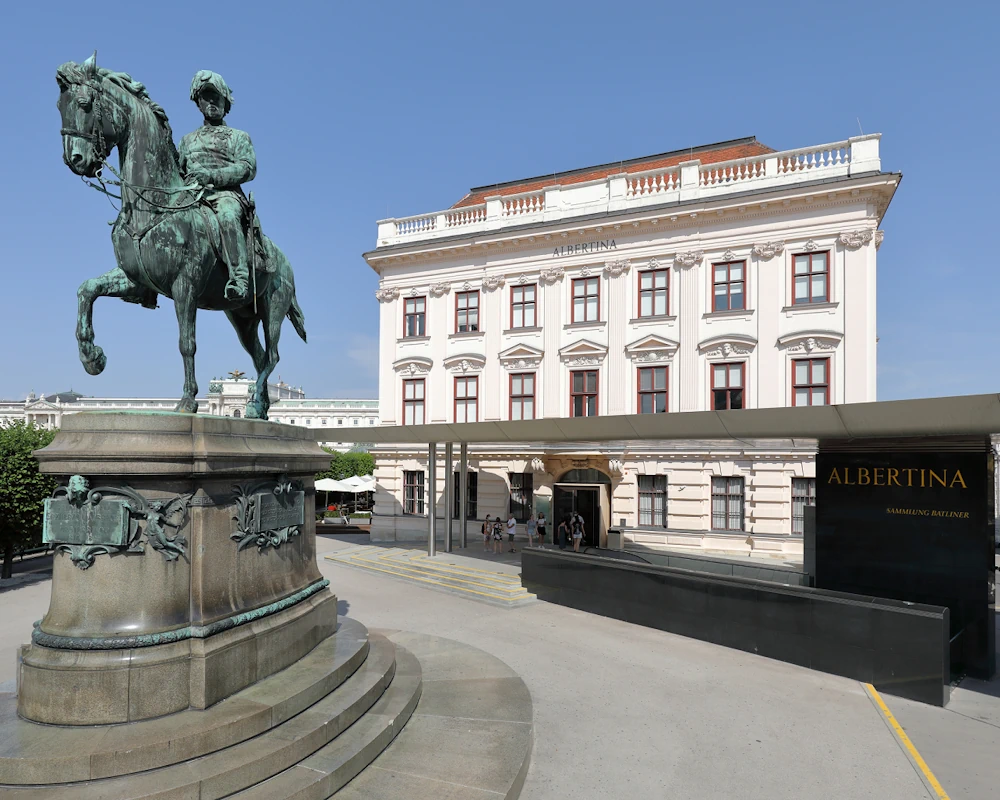
In the historic center of Vienna, where Augustinerstrasse meets the palace complex and at the heart of the UNESCO World Heritage urban fabric, one of the most successful examples of modern art museology welcomes its visitors: the Albertina. Founded in 1776 by Prince Albert of Saxony-Teschen and named after him, this long-standing institution initially stood out for its graphic art collection; today, it rightfully holds the title of one of the most dynamic art institutions in Austria and Central Europe with both its permanent collection and internationally acclaimed temporary exhibitions. This extraordinary range, stretching from Durer's masterful drawings to Monet's water lilies, and from Picasso's cubist forms to Warhol's pop icons, makes the Albertina a unique collection that is impossible to limit to a single period or movement.
History of the Albertina Museum and the Uniqueness of Its Collection
Prince Albert was considered among the largest graphic art collectors in Europe during his lifetime. Consisting of over one million graphic works and 65,000 drawings, the collection still constitutes the world's largest and most valuable archive of art on paper today. Iconic drawings such as Albrecht Durer's "Hare" and "Great Piece of Turf" are the most recognized pieces of this collection; these works are so delicate that their exhibition conditions are controlled with extreme care and are only opened to the public during specific periods. The sketches and studies of European art giants like Rubens, Rembrandt, Raphael, and Michelangelo form the other precious components of the collection.
The extensive renovation and expansion works carried out by the Albertina in the 2000s transformed the museum from a mere archive into a dynamic exhibition space. The modern and contemporary art section, known as the Batliner Collection, houses significant works by names such as Monet, Picasso, Chagall, and Giacometti. This addition moved the museum beyond being just a historical collection site, turning it into an integrated experience platform that presents an uninterrupted history of art from the 19th century to the present day under one roof.
The Museum's Location and Visitor Experience
The Albertina is located in an extremely central position as part of the Habsburgs' former palace complex, right next to the Vienna State Opera. Within walking distance of the Karlsplatz station, where the U1, U2, and U4 metro lines intersect, the museum is easily accessible from Vienna's tourist center. The museum's terrace café and restaurant also offer an enjoyable experience that complements the visit; in particular, having coffee while overlooking Vienna's rooftops is one of the most beautiful ways to experience the city's atmosphere. The large area reserved for temporary exhibitions turns the museum into a vibrant cultural venue that is renewed throughout the year and offers a different visitor experience each time.
Significance for Tourism and Cultural Heritage
The Albertina is one of the three major institutions on Vienna's cultural tourism map, alongside the Kunsthistorisches Museum and the Belvedere. For visitors interested in the history of graphic arts, European modernism, and contemporary art, the Albertina offers one of the world's richest and most accessible contents. With over two million annual visitors, the Albertina is one of Austria's most visited museums and continues to be one of the strongest institutional representatives of Vienna's cultural identity and European art heritage.
Date Added: