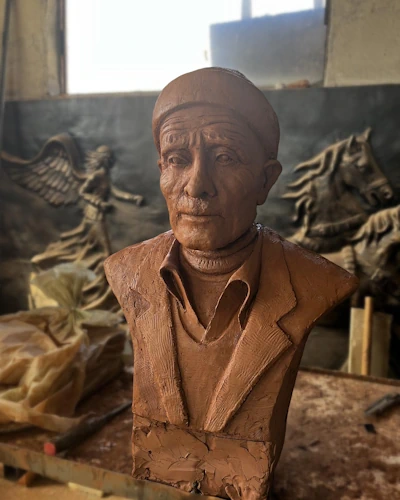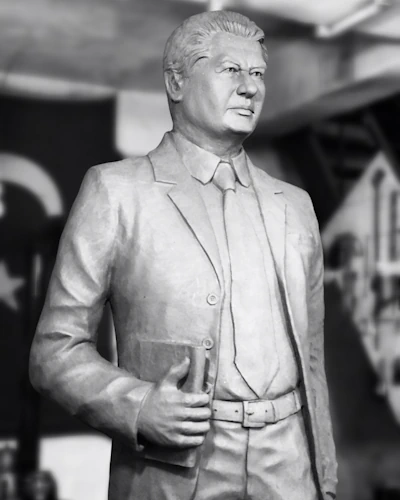
Agostinho Neto Statue - Luanda, Angola
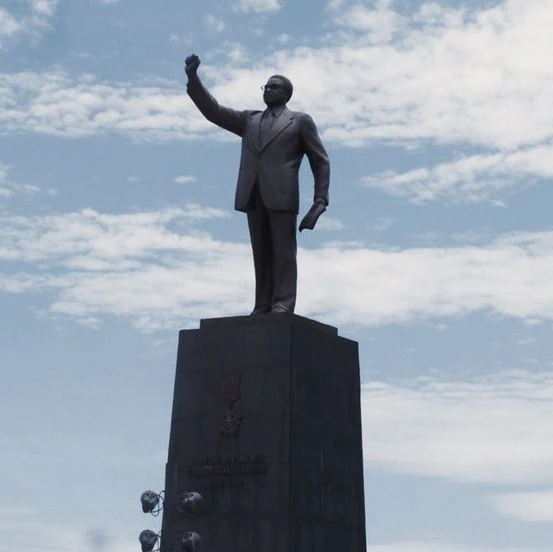
Angola's capital Luanda is home to one of the most striking monumental structures on the African continent. Dr. Agostinho Neto, the pioneer of the independence struggle against Portuguese colonial rule and Angola's first president, was born in 1922 and left an indelible mark on his country's history as a physician, poet and revolutionary. Today Luanda is home to a monumental landmark and cultural centre complex that keeps his name and legacy alive. This landmark has become an unmissable stop for history enthusiasts and tourists visiting the region.
Construction and History of the Monument
Following Neto's death from pancreatic cancer in Moscow on 10 September 1979, the Angolan government decided to commission a grand monument in his honour. The foundation stone was laid on 17 September 1982 by then-President José Eduardo dos Santos, on the occasion of what would have been Neto's 60th birthday. Construction was suspended for many years due to the collapse of the Soviet Union and the worsening Angolan Civil War; the project was revived in 1998, work resumed in 2005, and the structure was completed in January 2011. Built at a cost of approximately 40 million dollars by North Korea's Mansudae Overseas Projects, the monument was officially inaugurated on 17 September 2012, on the 90th anniversary of Neto's birth. Angola's Ministry of Culture has elevated the complex to the status of Historical and Cultural Heritage of Angola.
Features and Artistic Details of the Monument
At the centre of the 18-hectare campus rises a 120-metre concrete spire known locally as "Foguetão" (The Rocket). A fusion of brutalist and constructivist architecture, the tower was designed as a reference to Neto's poem "Pathway to the Stars." The machete-cogwheel-and-star emblem of the Angolan flag features prominently on its side. At the base of the spire, inside a pyramid structure, lies Neto's sarcophagus; his remains were embalmed by the same organisation responsible for embalming Vladimir Lenin. In the surrounding gardens, an elephant statue bows in the direction of Neto's tomb. The interiors are finished in marble floors and walls, and the exhibition halls contain comprehensive documentation of Neto's life and Angola's liberation struggle.
The Complex and Its Surroundings
The monument is situated in Luanda's Ingombota district, near Praia do Bispo, close to the Presidential Palace and the National Assembly. The complex has also evolved into an active cultural centre, hosting exhibition halls, a library, a theatre, music and dance workshops, and children's activity programmes. Illuminated at night, the structure dominates the city's skyline and has become one of Luanda's most iconic architectural landmarks. The complex can be reached by car or taxi; a visit at sunset is particularly recommended, as the light creates a dramatic effect on the monument.
The Legacy of Agostinho Neto
Agostinho Neto paid the price of his struggle against Portuguese colonial rule with repeated imprisonment. As leader of the MPLA (People's Movement for the Liberation of Angola), he declared Angola's independence on 11 November 1975 and became the country's first president. He governed the country through the turmoil of a long and devastating civil war, with the support of the Soviet Union and Cuba amid the tensions of the Cold War, remaining in office until his death in 1979. Also known as a poet, Neto's literary works remain an inseparable part of Angolan national identity and continue to be read to this day.
Visitor Information
The Agostinho Neto Memorial (MAAN) is located in Luanda's Ingombota district and can be reached easily from the city centre by car or taxi. The interior exhibition halls are open to visitors and photography is permitted, though rules may vary in the mausoleum section. Special events are held at the monument particularly on Neto's birthday, 17 September, and on the anniversary of his death, 10 September.
Date Added: