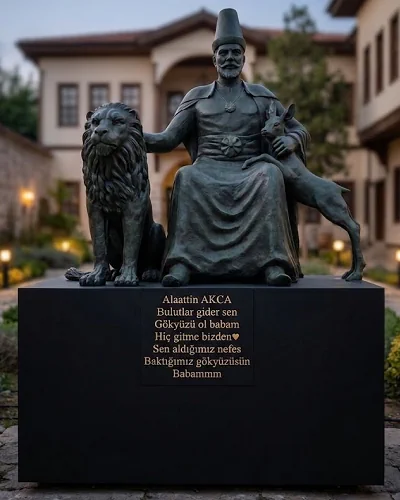
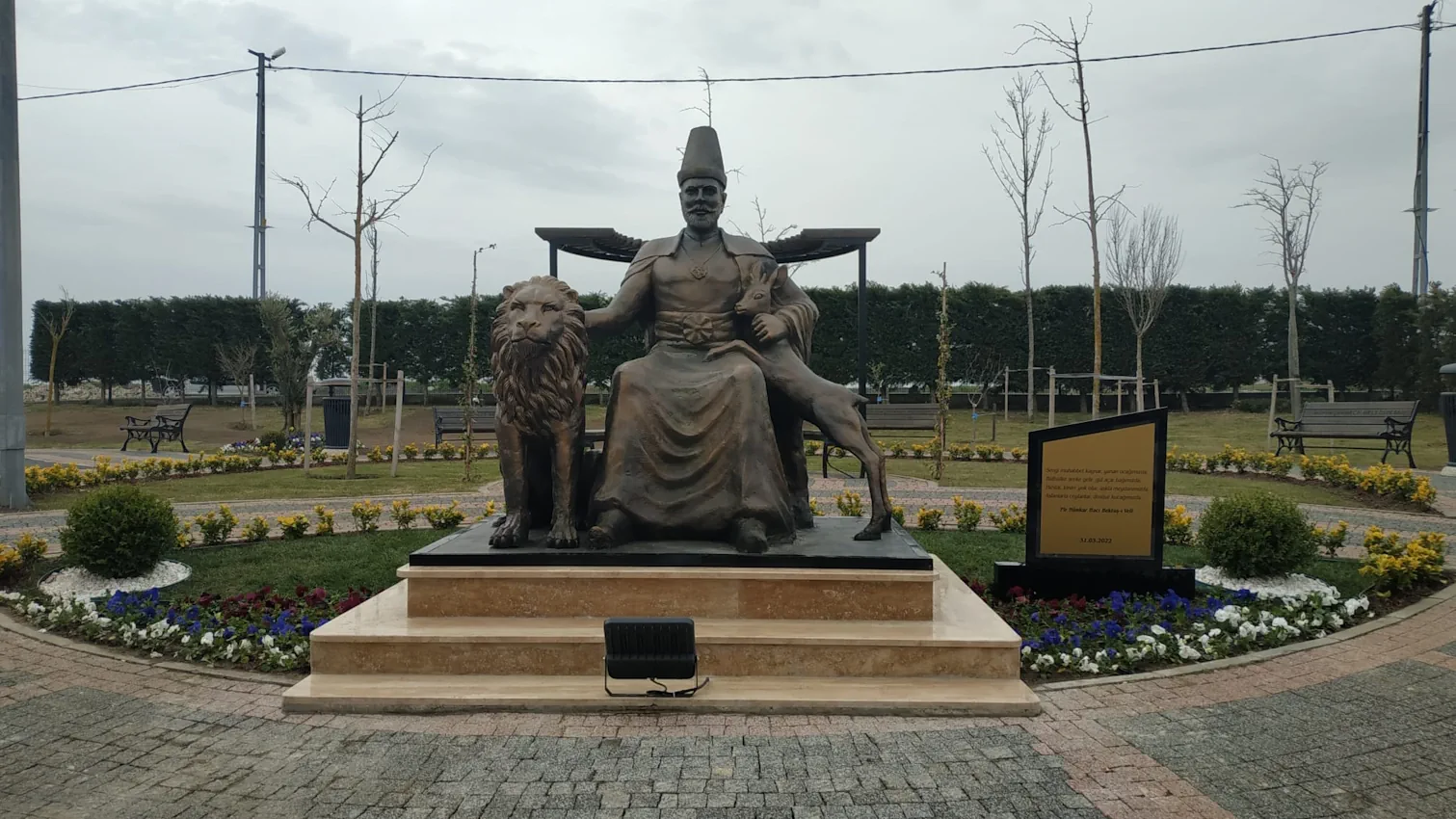
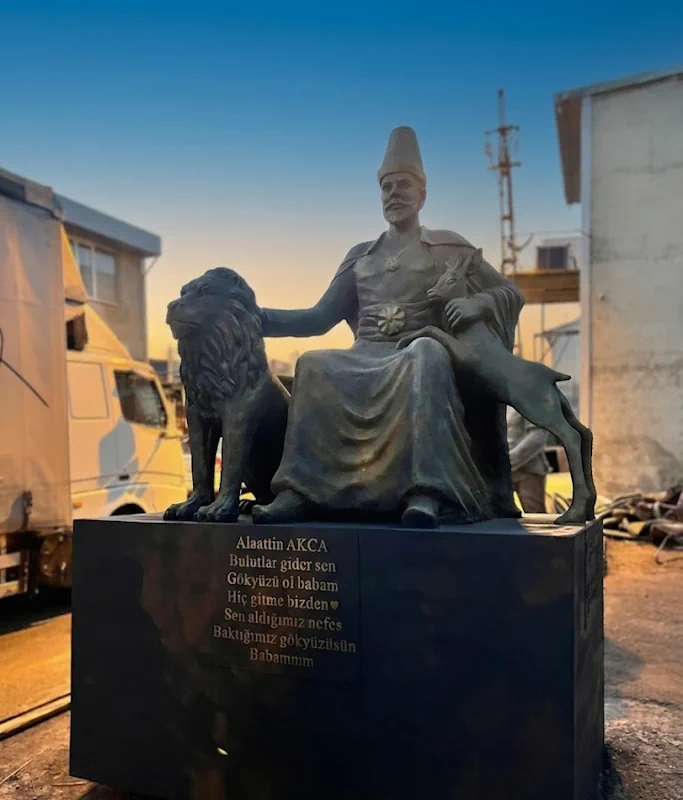
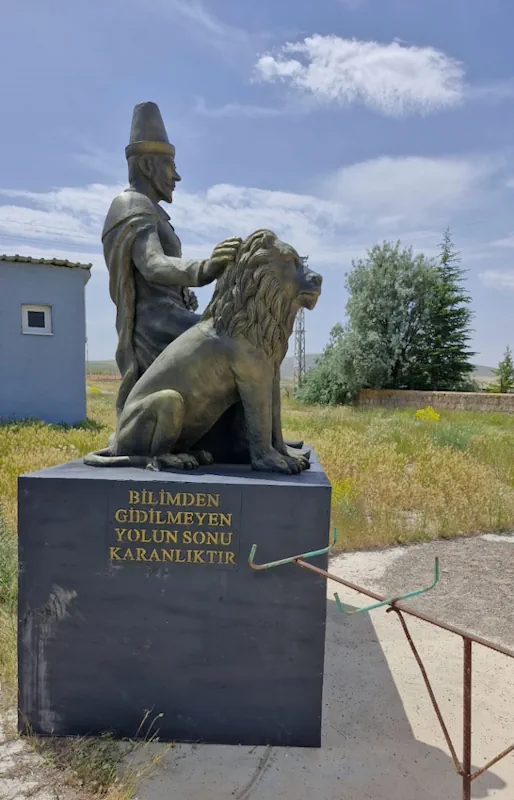
Haci Bektas-i Veli seated on throne with lion and gazelle, symbol of tolerance
Click on the image to enlarge.
Haci Bektas-i Veli's seated posture on the throne is the most powerful symbol of wisdom, tolerance and spiritual authority. This monumental sculpture reflects the historical depiction of the saint placing his left hand on the lion's head and his right hand on the deer's back, and the deep determination of Anatolia's tradition of love. This composition, where the lion and deer stand side by side, symbolizes the unity of opposites and the deep bond established with nature, while Haci Bektas's calm and dignified posture emphasizes the power of spiritual leadership.
Features of the Sculpture
This impressive work, produced from high-quality fiberglass material, offers an authentic appearance with detailed bronze patina coating. The muscular structure, fur and mane details of the lion and deer figures are masterfully crafted; Haci Bektas's traditional Bektashi crown, robe and chest medallion are modeled with historical accuracy. The sculpture, which can be mounted on a granite or marble base, can be custom produced in different sizes. Thanks to its durable structure against outdoor conditions, it can be used without problems in squares and parks for many years.
Areas of Use
It is an ideal monumental sculpture for municipal squares, cultural centers, cemevis, university campuses and city parks. It forms a powerful symbol in Alevi-Bektashi cultural spaces, dergah areas and venues that highlight spiritual values. This work, representing the values of tolerance, love and the perfect human being, inspires younger generations and strengthens collective memory. It is an impressive choice for prestigious institutions and cultural heritage projects.
Date Added: | Last Updated:
Monument 180 cm 160 cm 130 cm Fiberglass Custom Made 90 kg
Haci Bektas-i Veli sculpture can be produced as a single piece together with the lion and gazelle figures. This production method maintains the integrity of the composition while facilitating transportation and installation. The lion and gazelle figures form an organic whole with the main body, crafted from high-quality fiberglass. Figures can also be produced separately upon customer request, which is especially practical for large-scale orders during shipping.
Haci Bektas-i Veli's depiction on a throne symbolizes his spiritual authority and guiding role. In historical miniatures and depictions, the saint is shown seated on a throne reflecting his wisdom and spiritual power. This posture is not an ordinary sitting position; it is a composition that highlights the identity of Anatolia's spiritual leader addressing, guiding and protecting his people. The throne is an important symbol in Bektashi tradition representing the spiritual rank of saints.
The chest medallion on the Haci Bektas-i Veli sculpture represents one of the most important symbols of Bektashi faith and Alevi-Bektashi culture. The motifs on the medallion symbolize tawhid, the unity of God, and the journey of human maturation. This symbol, located on the saint's chest in historical depictions, is an expression of spiritual identity and belonging to the order. The meticulous crafting of this detail in the sculpture reflects the importance given to historical and cultural accuracy, adding deep meaning to the work.
In Bektashi tradition, the lion is a sacred symbol representing Hz. Ali and spiritual power. Haci Bektas-i Veli's relationship with the lion demonstrates his spiritual dominance over nature and his rank as a saint. The gazelle symbolizes purity, innocence and the freedom of the soul. The coexistence of these two figures represents the unity of opposites, showing that strength and gentleness, courage and love can exist simultaneously. In folk narratives and legends, the lion and gazelle are among the most well-known symbolic elements associated with Haci Bektas-i Veli.
The Haci Bektas-i Veli sculpture was designed drawing inspiration from Ottoman period miniatures, Bektashi dervish lodge depictions and historical written sources attributed to the saint, primarily the Makalat. Historical artifacts and iconographic visuals found at the Hacibektash Dervish Lodge in Nevsehir also played a decisive role in shaping the composition. The artist meticulously examined these sources and reflected every detail in accordance with historical accuracy, from the number of folds in the crown to the curves of the robe, from the chest medallion to the hand positions.
The Bektashi crown worn by Haci Bektas-i Veli in the sculpture represents spiritual maturity and high rank within the order. The folds of the crown refer to the four gates and forty stations teaching in Bektashi belief. The robe is a symbol of dervishhood and worldly simplicity, showing that the saint embraces spiritual rather than material wealth. Together these two elements reflect Haci Bektas-i Veli's identity as both a leader of the order and a wise guide for humanity. The careful crafting of these details in the sculpture enhances the cultural and historical depth of the work.