Geometric wolf sculpture — stylized design harmonious with stone base
Click on the image to enlarge.
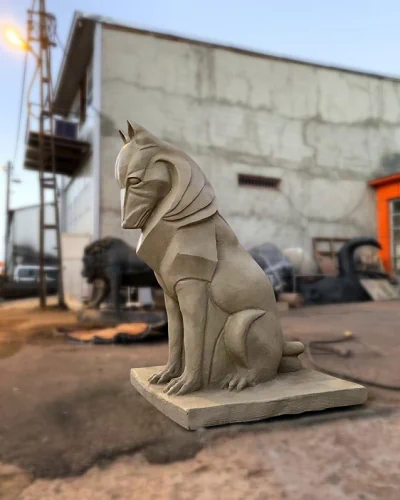
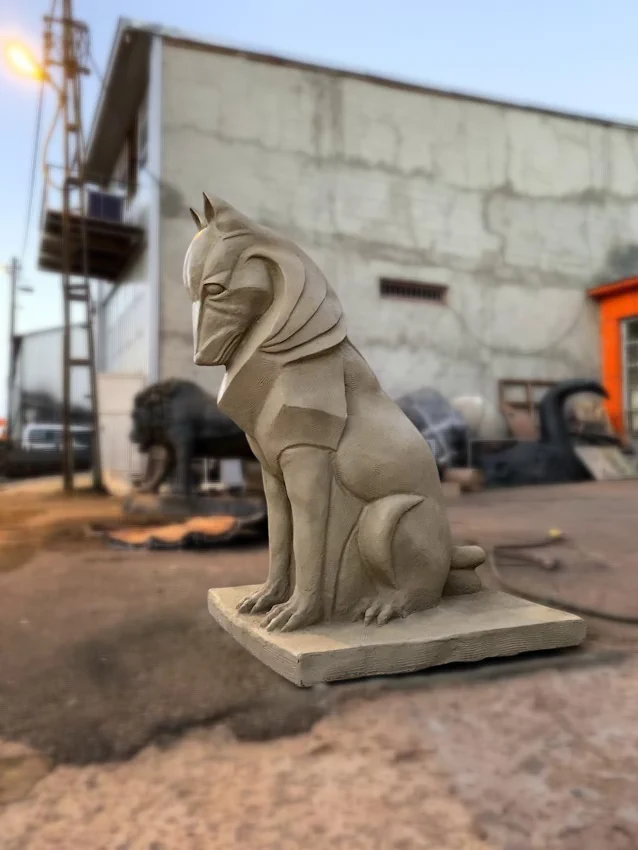
One of the most deep-rooted symbols of Turkish mythology, the wolf figure comes to life once again through a geometric and stylized interpretation. Every surface of this work has been crafted with care, bringing together traditional wolf symbolism and a contemporary aesthetic sensibility. With its powerful stance and distinctive design, it adds both cultural meaning and visual impact to any space it occupies.
Features of the Sculpture
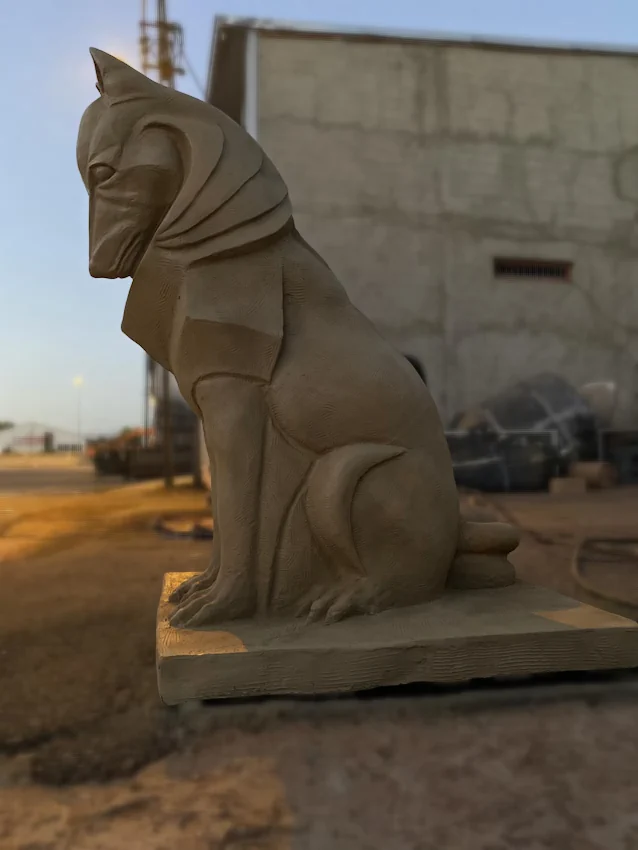
The geometric wolf sculpture has been shaped with a low-poly surface approach; each facet plane works in harmony with the others to create a unified and powerful form. Its seated posture reflects a dignified and resolute character. Every detail has been meticulously worked from the clay modeling stage onward, and the sculpture is produced using durable, long-lasting materials. Designed to suit both indoor and outdoor conditions, it is produced to order in different size and material options.
Areas of Use
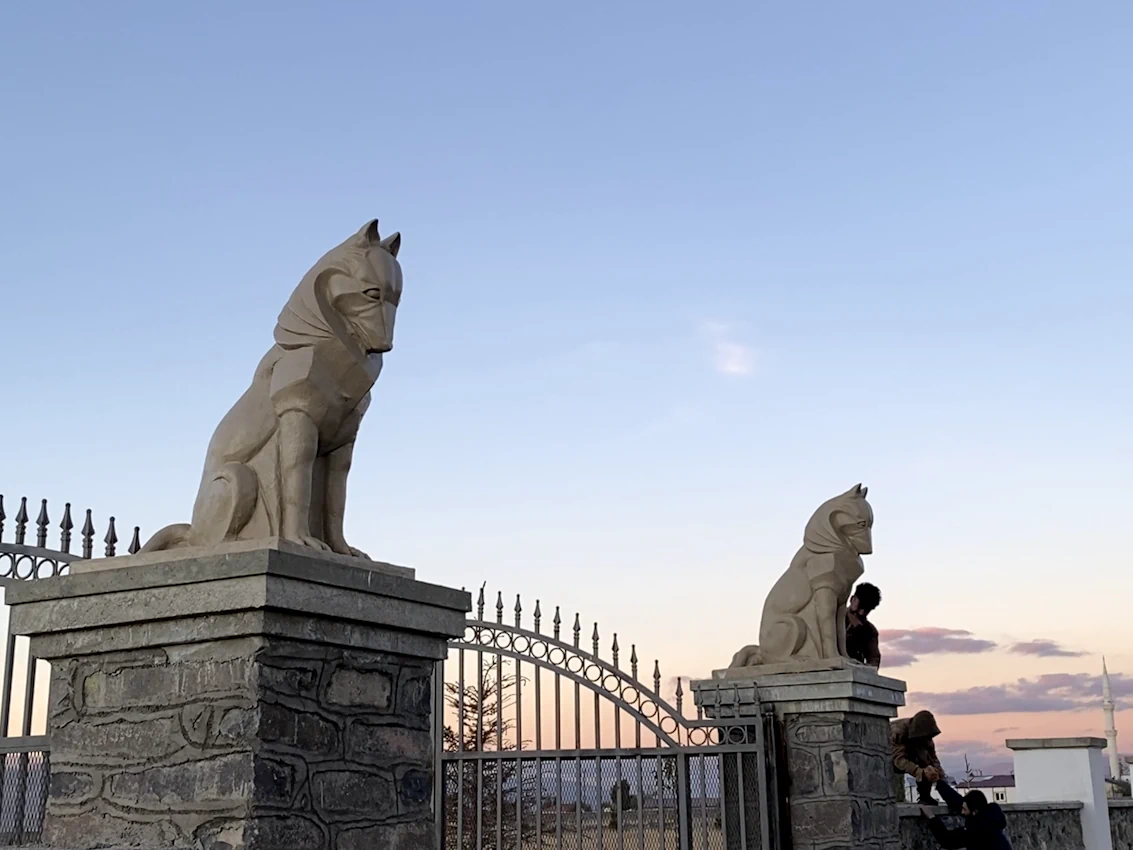
The geometric wolf sculpture serves as a powerful identity element for municipal squares, park entrances, corporate building fronts, and private gardens. When placed on gate and entrance columns, it lends a monumental character to the space. It also holds significance as a decorative work for cultural centers, university campuses, and museums. Symbolizing respect for Turkish culture and history, this sculpture transforms into a striking focal point in any environment.
Date Added: | Last Updated:
Decorative 90 cm 160 cm 130 cm Fiberglass Ready Mold 40 kg
The geometric wolf sculpture was produced using fiberglass material, noted for its lightness and durability. Fiberglass is a professional material preferred in sculpture production for its high resistance to outdoor conditions and its durability against moisture and frost. Its lightweight structure also facilitates transportation and installation processes. Surface treatments and paint applications yield highly successful results on fiberglass, and the sharp lines of the geometric facet surfaces emerge most clearly with this material.
Low-poly aesthetics is a design approach inspired by digital 3D modeling that transforms organic forms into a geometric structure composed of numerous flat surfaces. In the geometric wolf sculpture, this approach has been realized by expressing each anatomical region of the wolf figure through angular and faceted planes. The result is a powerful form that conveys both a modern and an archaic sensation. This aesthetic gives the sculpture a distinctive and contemporary identity that goes beyond an ordinary figurative work.
The seated position adds both physical balance and deep symbolic meaning to the wolf figure. In Turkish mythology, the wolf is regarded as a protective, guiding, and powerful being. The wolf in a seated posture additionally symbolizes patience, authority, and guardianship. The fact that this sculpture, placed at gate entrances, has been designed in a seated position reinforces the image of a powerful presence that guards the space and welcomes those who enter.
The installation of the geometric wolf sculpture onto the stone column is carried out with safety and longevity as the primary considerations. The metal anchoring system placed at the base of the sculpture is secured to the column surface using special adhesive and mechanical fastening elements. This ensures that the sculpture remains stable against factors such as wind, earthquakes, and external impact. Before installation, the load-bearing capacity of the column and the ground level are checked, and support reinforcement is applied when necessary.
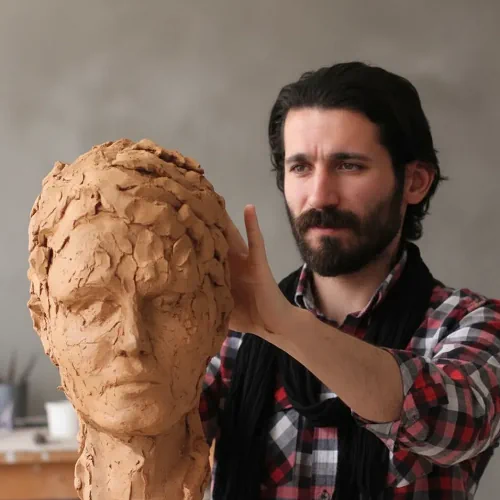
The facet surfaces of the geometric wolf sculpture have been shaped entirely by hand from the clay modeling stage onward. Each plane has been worked by skilled hands so that it meets the adjacent surfaces at the correct angle. This process requires both geometric precision and artistic integrity. This approach, born from direct craftsmanship rather than a digital mold, makes each sculpture unique. The play of light and shadow created by the facet surfaces is only made possible through this meticulous handcraft.
The geometric design approach offers significant contributions to sculpture making from both aesthetic and technical perspectives. Aesthetically, reducing organic forms to angular planes gives the work a contemporary and distinctive identity. Technically, having each surface defined by a specific angle and measurement ensures consistency and precision throughout the production process. The geometric approach also allows light and shadow to create a more dramatic and controlled effect on the surface. As a result, the sculpture offers a different visual experience under every lighting condition.